Exploring the Online Slots Experience at Chumba Spins Casino
- November 22, 2026

A guide on how to Make Sense of Casino Tournaments

I recall the first time I looked at a casino tournament lobby and felt completely lost. There were leaderboards, countdown timers, prize pools spread over dozens of places, and terms like “re-buy period” that meant nothing to me. If you have ever experienced that same confusion, I want to guide you through exactly how these competitions work, why they can be more rewarding than standard play, and what you need to verify before you commit a single spin or hand. At Kikabet Casino, the tournament section has become one of the most visited parts of the platform, precisely because it turns solo gaming into something more social and strategic. By the time you complete this, you will know how to pick the right event, manage your bankroll during a timed session, and understand a prize table without second-guessing yourself.
At its most basic, a casino tournament is a organized competition where you compete in designated games during a set window, and your performance is assessed against other players rather than against the house. Unlike regular play, where your goal is just to win money from each spin or hand, a tournament asks you to accumulate points, build the highest single-win multiplier, or generate the largest total win relative to your bet size. The operator sets the rules, supplies the prize pool, and displays a leaderboard that updates in real time or at fixed intervals. I find this format compelling because it adds a layer of purpose to every session; you are not just playing for the immediate return but also for a position that could multiply your entry stake many times over.
The structure can vary enormously, but the core principle holds the same: everyone competes on a level playing field during the same timeframe. Some tournaments are free to enter, funded entirely by the casino as a loyalty perk, while others require a buy-in or a minimum deposit to qualify. What I appreciate most is that the house edge does not disappear, but the prize pool often distributes value in a way that rewards skill, consistency, or sheer volume of play more than a typical cash session would. Understanding this fundamental shift, from playing against the casino to playing against other users, is the first step toward making sense of the whole category.
When I look through a tournament lobby, I mentally group every event into one of three buckets: points-based, multiplier-based, and knockout. Points-based tournaments are the most common and the easiest to grasp. You gain points for every qualifying spin or hand, usually calculated as a ratio of your win to your stake. A £1 spin that returns £10 might yield ten points, while a £5 spin returning £10 earns only two. This structure naturally favours consistent, high-return play rather than simply betting big, which is why I often suggest it to players who want their skill at choosing volatile or steady games to matter.
Multiplier-based tournaments, sometimes known as “highest single win” events, ignore total volume and focus entirely on the biggest multiplier you achieve on a single round. If you hit a 500x win on a slot, that number appears on the leaderboard regardless of how many other spins you took. These tournaments compensate patience and a willingness to endure dry spells while hunting for one monster result. Knockout or head-to-head formats are rarer but increasingly common on platforms like Kikabet Casino. You are paired against another player, and the one with the higher score after a short round advances. These seem closer to a poker sit-and-go and demand a different kind of tactical thinking, especially around bet sizing and game selection during the limited window.
Not all tournaments are complimentary, and the way you register directly influences your EV. A freeroll needs no fee and gives real-money payouts, making it the cleanest value offer on the site. The catch is that freerolls pull in huge crowds, so your chance of finishing in the money is reduced. Paid tournaments ask for a predetermined buy-in, which is added to the prize pool or is supplemented by the casino. I treat these as any other gambling outlay: I establish a budget, I recognize that I might not cash, and I participate only if the enjoyment and potential return justify the cost.
Re-buy periods bring another level of complication. During a specified window, generally the first hour or half of the tournament, you can cover the buy-in again to restore your score or boost your point total, based on the rules. Some events permit unlimited re-buys, while others limit them at two or three. I am cautious with re-buys because the cost can escalate quickly, and the extra expense does not ensure a improved finish. Before I register for any tournament with a re-buy choice, I decide in advance how many times I am ready to re-buy and I stick to that number. If the tournament provides a single “add-on” at the close of the re-buy period, a one-time buy that increases your chip count, I include that into my initial budget too.
I have witnessed too many players join a tournament, look at the prize pool figure, and believe they have a realistic shot at the top prize without examining the distribution table. The headline number is almost always divided across dozens or even hundreds of positions, and the decrease between first and twentieth place can be significant. A £10,000 prize pool might give £2,000 to the winner, £1,000 to second, and then taper down to £5 for places 50 through 100. Reviewing the full prize structure before you enter is crucial, because it reveals you whether the tournament prizes a top-three finish or distributes value more evenly for casual participation.
Leaderboards themselves are available in two flavours: live and batched. A live leaderboard refreshes after every qualifying round, which I find incredibly encouraging because you can watch your rank shift in real time and adapt your pace accordingly. Batched leaderboards update every few minutes or hours, which decreases server load but can leave you guessing during a critical push. I always confirm the refresh policy before I begin, because understanding whether you are truly in 11th place or whether the board is ten minutes old can change your decision to keep playing or cease. Some tournaments also hide player names until the event ends, which stops targeted chasing but can cause the experience to feel less personal.
Event play can warp your perception of money if you are not careful. The buy-in might be £10, but the urge to re-buy, the inclination to raise your bet size to chase a leaderboard position, and the sunk-cost feeling of being “almost there” can propel your spending well beyond what you planned. I set a hard tournament budget that is distinct from my regular gaming bankroll. This budget covers the entry fee, any planned re-buys, and the expected wagering during the event. Once that number is gone, I stop, regardless of my leaderboard position. Leaving from a tournament where you are in 15th place with ten minutes left is tough, but it is a discipline that safeguards you over the long term.
I also monitor my return on investment for tournaments over time, not session by session. A single tournament result is too volatile to draw conclusions from; you can play perfectly and finish outside the prizes, or play poorly and luck into a top-three finish. By documenting my buy-ins, re-buys, and prizes across twenty or thirty events, I gain a clearer picture of which formats match my style and whether I am genuinely successful or just appreciating the ride. This data-driven approach keeps me grounded and stops the emotional highs and lows from dictating my decisions.
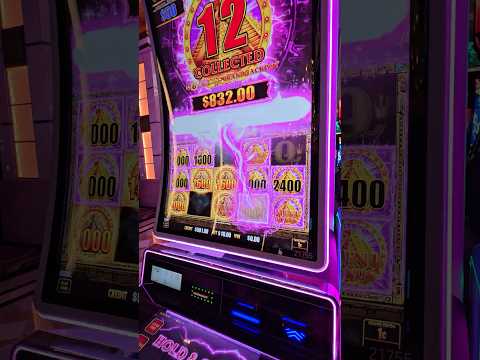
Slot competitions dominate the calendar at many online casinos, and for good reason: they are quick, eye-catching, and straightforward to comprehend. My primary advice for slot events is to check whether the tournament includes all spins or solely winning spins. If just wins count, you want a game with a strong hit frequency, something that delivers small amounts regularly as opposed to a high-volatility title that can stretch fifty spins without a return. If every spin counts toward your point total, then volatility matters less, and you can afford to go after bigger multipliers. I also closely monitor the minimum bet requirement. Some tournaments invalidate spins beneath a certain threshold, so configuring your autoplay to the minimum qualifying stake eliminates wasting time and money.
Velocity is another factor that many players ignore. In a timed slot tournament, the quantity of spins you finish directly affects your score, assuming all spins count. I turn off animations and sound effects where practical, utilize turbo or fast-play modes, and set autoplay to the maximum number of spins permitted. These small adjustments can boost your spin count by twenty or thirty percent over a session, which compounds into a notable leaderboard advantage. Just be sure that the tournament rules authorize autoplay; some clearly require manual spins to prevent scripting.

Live casino tournaments bring a completely different rhythm. You are playing blackjack, roulette, or baccarat against a real dealer, and your performance is judged either by profit, total wagered, or a points formula. In blackjack tournaments, I adjust my strategy slightly from perfect basic strategy because the goal is to outscore opponents, not just to minimise the house edge. If I am trailing near the end of a round, I might take a riskier double-down or split that I would avoid in a cash game. Roulette tournaments often reward total wagered rather than net profit, which means covering more of the wheel can be a viable approach, though I always calculate whether the prize justifies the expected loss from spreading bets thinly.
Momentum is everything in live tournaments because each round takes longer than a slot spin https://casinokikabet.com/. You cannot simply increase your volume; you have to make each decision count. I watch the leaderboard between hands and adjust my bet sizing based on where I stand. If I am comfortably in a qualifying position, I reduce my risk. If I need a big gain, I increase my stakes and accept the possibility of busting out. This dynamic, reactive style of play is what makes live tournaments the most engaging format for me, and it rewards players who stay alert rather than coasting on autopilot.
The most frequent mistake I encounter is players entering a tournament without checking the full terms. Game eligibility is a common trap: you may think all slots count, but the rules often specify a shortlist of qualifying titles. Playing an excluded game for an hour yields nothing. I usually open the tournament details page, scroll to the game list, and pick my title from there. Another pitfall is ignoring currency and bet limits. Some tournaments are set in a specific currency, and if your account uses a different one, your spins may not count or may be exchanged at an unfavourable rate.
Recovering losses inside a tournament is another danger. Because the format creates a competitive layer, it is common to justify “just one more re-buy” as a strategic move rather than a loss-chasing impulse. I remind myself that the prize pool is fixed, and my additional spending does not raise it; it only adds to my cost. If I am not liking the process or if I become anxious about my spend, I close the tournament tab and return to regular play or step away entirely. The leaderboard will still be there, but your bankroll may suffer if you disregard your own limits.
As I browse the tournament section at Kikabet Casino, the first thing that catches the eye is the diversity of formats running simultaneously. On any given day, you might find a slots race tied to a new game launch, a live blackjack weekly leaderboard, and a network-wide progressive tournament that combines players from multiple casinos into one massive prize fund. This layered approach means I can pick events that fit my mood: a quick thirty-minute sprint, a week-long grind, or a high-stakes live competition. The lobby presents each tournament’s remaining time, current leader count, and prize distribution transparently, so I never have to dig through a separate page to find the details I need.
What I especially appreciate is the clarity around entry requirements. Freerolls are clearly labelled, paid tournaments show the buy-in from the start, and events that require a bonus code or opt-in are highlighted with a prominent button. The platform also sends push notifications and email alerts when a tournament you have joined is nearing its end, which has prevented me from forgetting about a leaderboard position more than once. While I cannot quote specific prize amounts because they change weekly, the guaranteed prize pools are competitive with what I see across the UK market, and the payout structures tend to benefit deep runs rather than concentrating everything on the top three spots.
If you have not ever joined a casino tournament before, I suggest starting with a low-stakes or freeroll slot event to grasp the rhythm without financial pressure. Pick a game you are familiar with, because familiarity with the paytable and bonus features enables you focus on the tournament mechanics rather than deciphering how the slot works. Place a timer on your phone for the tournament duration, and determine in advance how many spins you intend to complete. View the first one purely as a learning experience; any prize you win is a bonus. After the event ends, review the leaderboard and observe how many points the top players gathered. This offers you a benchmark for future events and aids you gauge whether your pace was competitive.
Once you are at ease with the format, diversify into paid tournaments with modest buy-ins and test with different game types. The skills you acquire in a slots race do not entirely translate to a blackjack tournament, so afford yourself time to adapt. Keep notes on which formats you prefer and which ones produce consistent results. Over time, you will build an instinct for which events are worth your time and money, and the tournament lobby will feel less like a confusing wall of numbers and more like a curated list of opportunities. At Kikabet Casino, the tournament calendar renews regularly, so there is always a new challenge waiting when you are ready to take the next step.